Spotted Lantern Fly
Spotted Lanternfly - Invasive Species
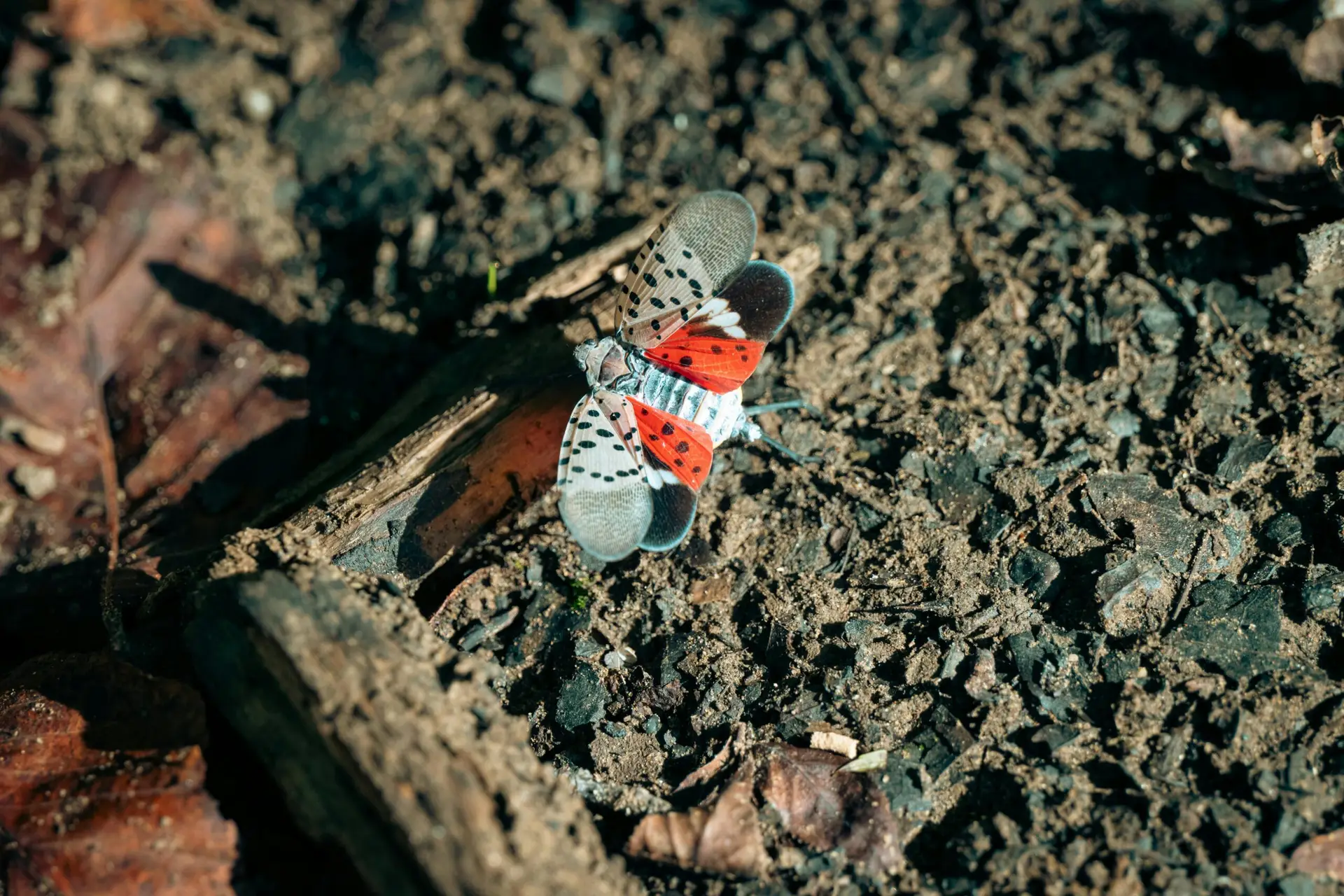
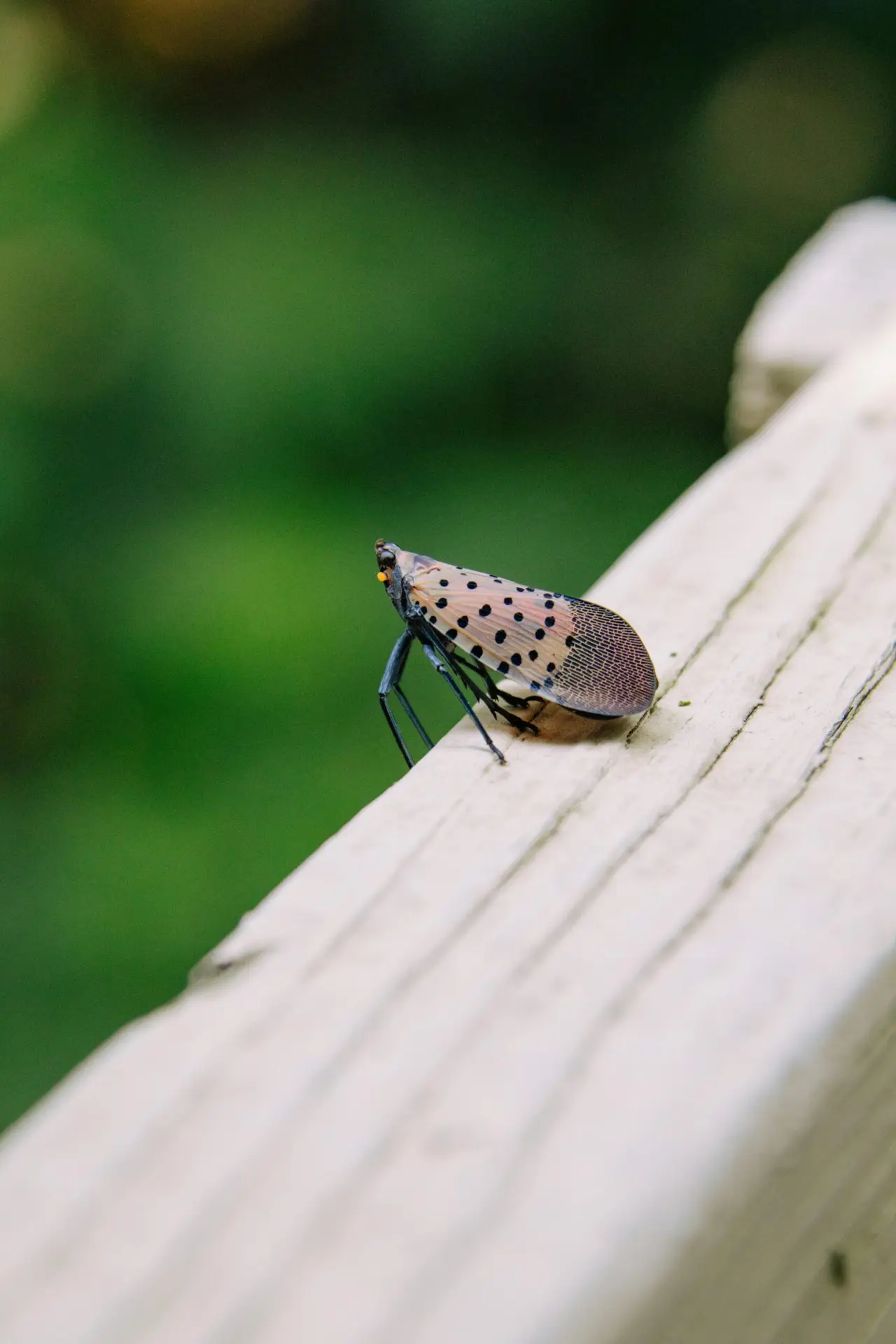
The spotted lanternfly is a species of planthopper that can feed on a wide variety of plants and has been shown to adapt well to local climates, making the potential range for this invader very large. The main concern with this species is the damage that it can cause to ornamental plants, fruiting trees and vines, and timber trees, which can have serious economic impacts.
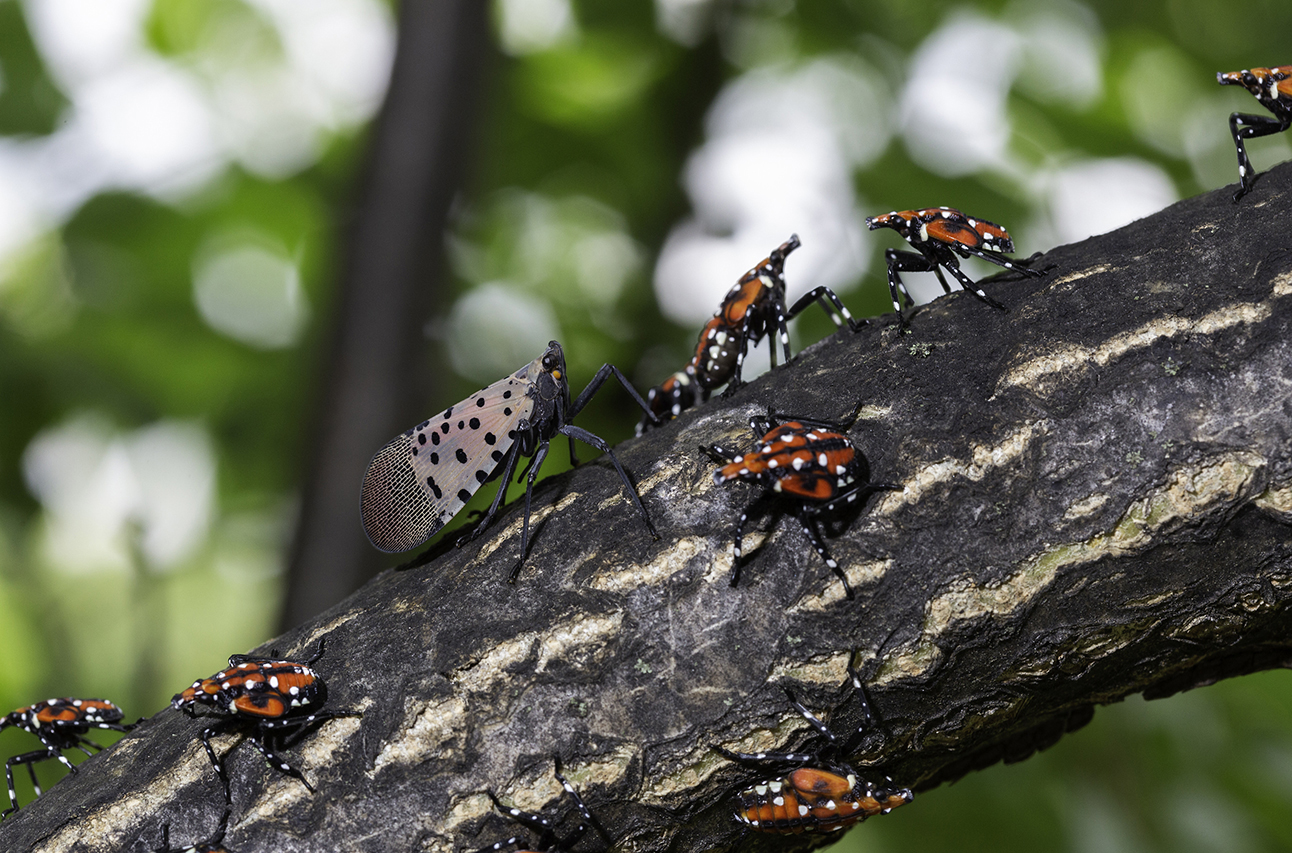
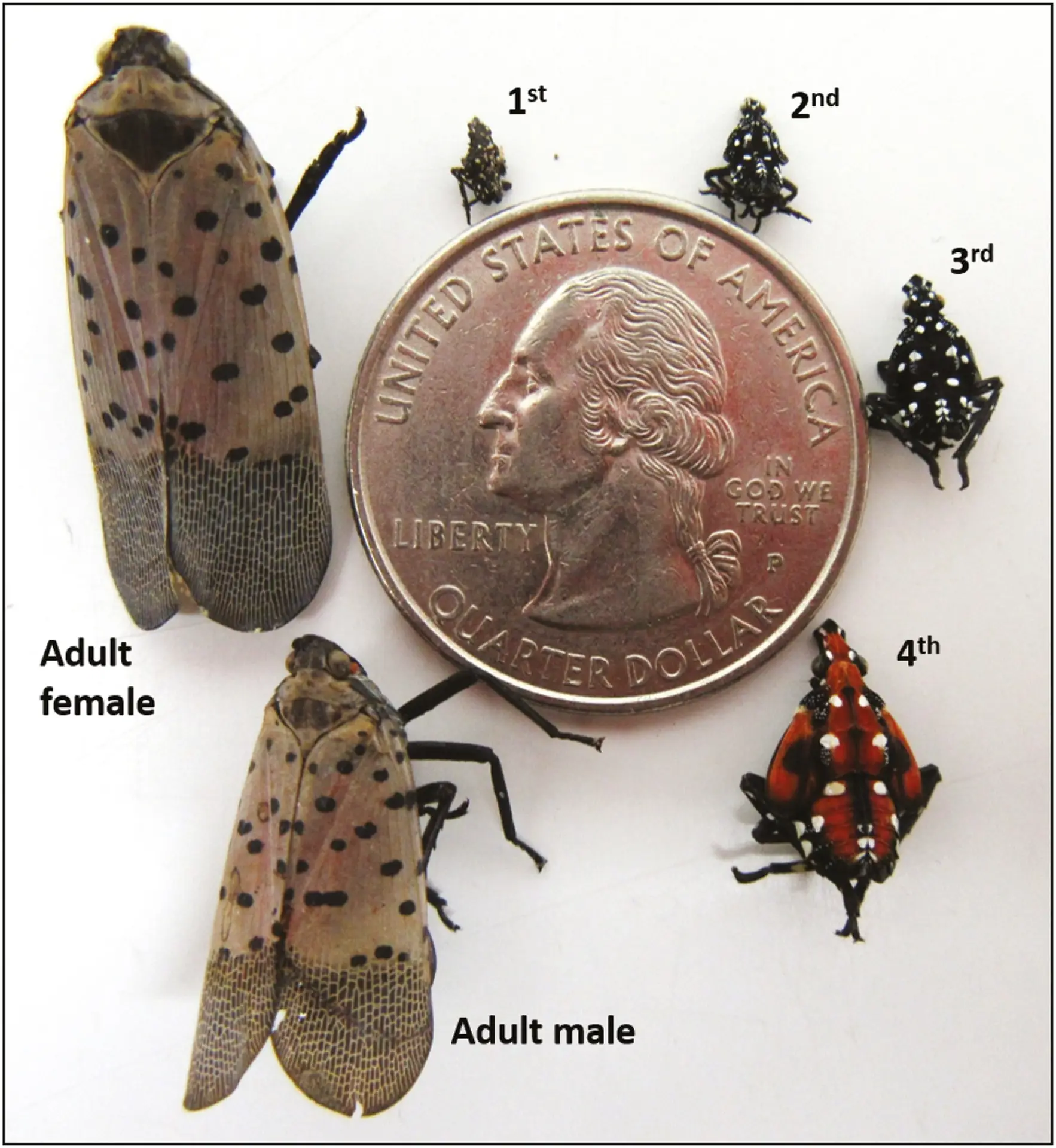
Spotted lanternflies are most active during the summer months. Egg masses can be found on trees, bricks, stones, fences, equipment, and vehicles during the winter season and after at least two weeks of warm spring temperatures, the eggs will begin to hatch. Spotted lanternflies hatch out as nymphs and have several growth stages before finally emerging as adults around July. They then remain active through the first freeze of the year, at which time the adults die and the eggs overwinter.
While spotted lanternflies pose no risk to structures or human health, they can have a devastating impact on the environment and the economy. In order to manage these insects, egg masses, nymphs, and adult spotted lanternflies should be destroyed when possible. Host plants can also be removed from properties and chemical control methods are also be effective.
Source: Well-Spotted: The Spotted Lanternfly, Pestworld, November/December 2025
If your home or business is inundated with spotted lanternflies, or you would like preventive protection from these pests, we offer specific treatment procedures and materials to help control these pests. Please call or text our office for more information or to schedule a spotted lanternfly service.
Contact Us Today